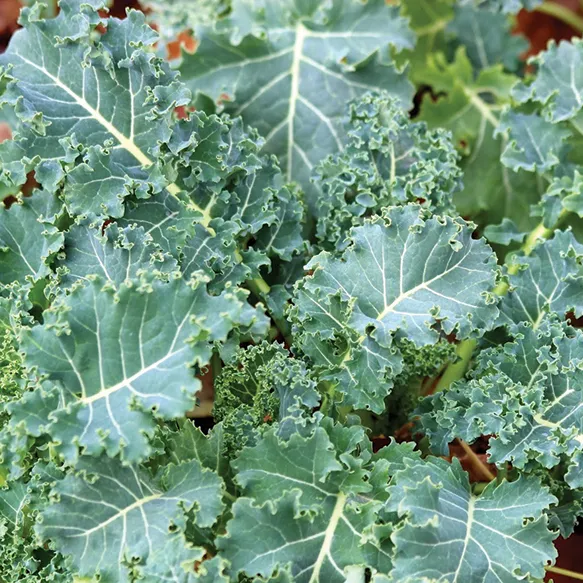
Kale (Brassica oleracea var. acephala) is a biennial forb native to southern US states (such as Texas, Georgia, and Virginia) and has also been successfully introduced across North America as a non-invasive plant that can thrive in USDA Zones 2–11 as a cool-season annual. Reaching a mature height of 1–3 feet with an upright rosette growth habit, it features thick, crinkled or ruffled dark green to purple leaves and produces racemes of yellow flowers in its second year. It thrives in fertile, moist, well-drained soils in full sun and is ideal for commercial vegetable production, forage brassica mixes, and agricultural soil cover.
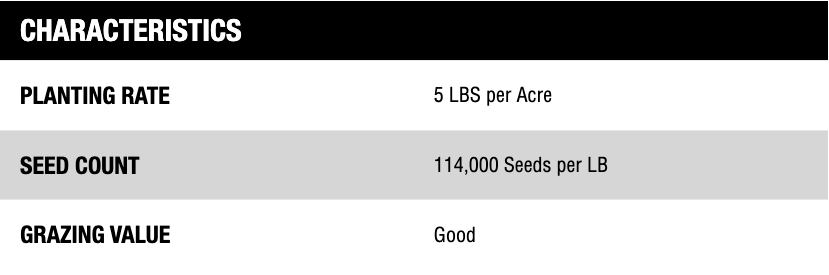
Kale is a very long season brassica with good tolerance to both heat and cold. It is best planted in early spring and will provide leafy forage until winter temperatures drop below 10 F the folowing winter. Seeding rate in pure stand is 5 lb per acre, with an optimum seeding depth of 1/4 to 1/2 inch.
Species Attributes
Seeds Per lb
130000
Growing Region
Midwest, Southeast, Intermountain West, California, Pacific Northwest, North America, Southwest
Native
Introduced
Life Form
Forb
Life Cycle
Annual
Light Requirements
Sun
Precipitation Requirements
Medium
Mature Height
1-2 ft
Flowering Season
Spring
Cool/Warm Season
Bloat/Non-Bloat
Bloom Color
Yellow
Bunch/Sod
Experts in providing seed and erosion control solutions for a wide range of applications. Visit our parent company The NativeSeed Group.