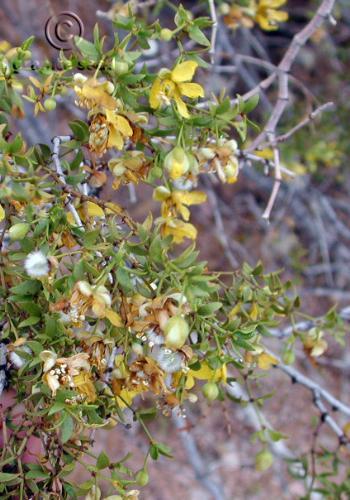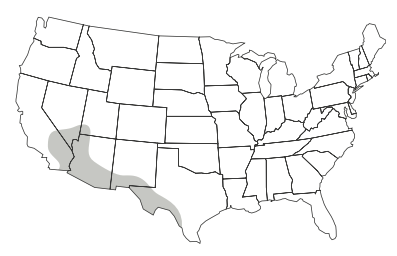
Extremely long-lived evergreen shrub up to 13 ft. tall with bright yellow flowers, blooming January to June and year-round following rain. Occurs on well-drained, calcareous, sandy and alluvial soils, often over caliche hardpan, on dry plains, mesas, slopes and hillsides as a dominant or codominant in desert grassland, shrubland and woodland communities; up to 7,000 ft. elevation. The most common and widely distributed shrub in North American deserts, often forming pure stands by cloning. Some clones are thought to be several thousand years old and may be the earth's oldest living organisms. May resprout after low-severity wildfire. Frequently utilizes White bursage (Ambrosia dumosa) as a nurse plant to reestablish on a site after disturbance. Unpalatable to wildlife or livestock. Used for cover and nesting habitat by numerous mammals and birds. Desert tortoises commonly dig shelters beneath it, using the root system to stabilize the structure. Host plant to the Lac scale insect.