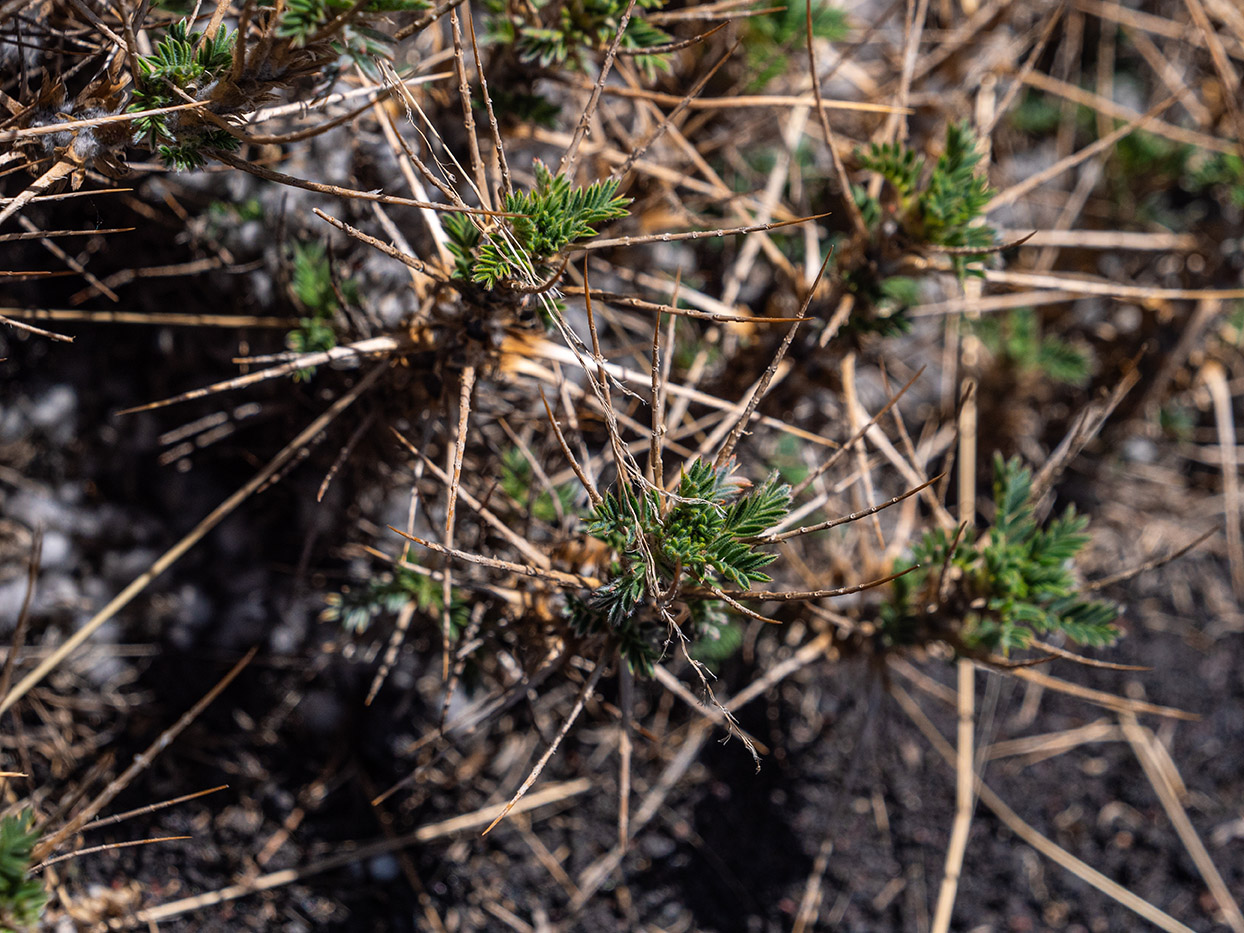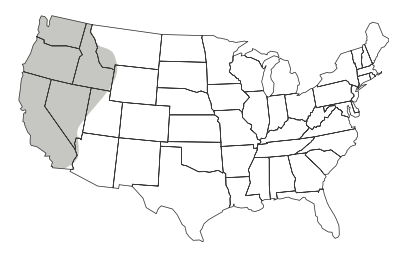
Drought tolerant, long-lived perennial native legume with showy pale-yellow to creamy white flowers, blooming April to July. Widely distributed and abundant on western arid and semiarid sagebrush steppe and open woodland ecosystems, from northern Mexico to southern Canada, often occurring in large colonies; up to 9,000 ft. elevation. Prefers coarse to semi-coarse soils, commonly basalt derived. Some ability to develop new shoots from lateral roots. Good colonizer after fire and competes well with cheatgrass. Use for revegetation, reclamation and habitat restoration on sites with increased fire frequency. Nontoxic to livestock and wildlife. Provides food for sage-grouse during the brood-rearing stage. Excellent pollen and nectar source for pollinators, including numerous species of native bees.