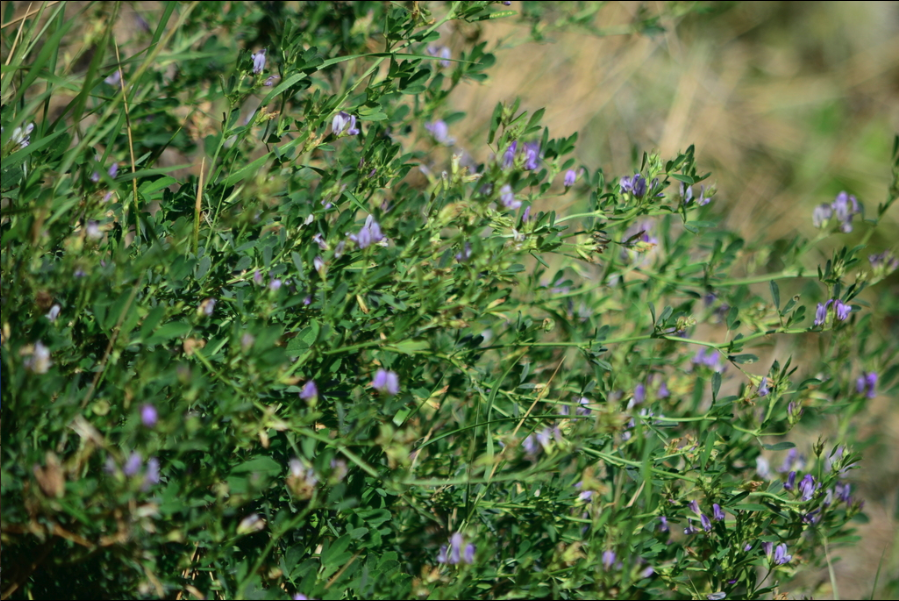
Potentially long-lived nitrogen-fixing perennial legume with a significant taproot and purple flowers. Adapted to fertile, deep, well-drained soils. Intolerant of poor drainage, high water tables and acidic soils. The world’s most well-known and widely used perennial forage legume for pasture, hay, silage, green-chop and rangeland. Excellent forage yield, quality and palatability. Seed alone or in mixed grass pastures; establishes easily. High bloat potential; use caution when grazing.
Also use for wildlife habitat for grazing ungulates, geese, grouse and other wild birds. Primarily pollinated by leafcutter bees and many types of native bees; honeybees are reluctant pollinators. Winter hardy, rhizomatous and multifoliate (MF) varieties available.